DATAMATH CALCULATOR MUSEUM
|
DATAMATH CALCULATOR MUSEUM |
Hewlett-Packard HP-35
| Date of introduction: | January 4, 1972 (announced) February 1972 (available) |
Display technology: | LED |
| New price: | $395 (MSRP January 1972) $295 (MSRP January 1974) |
Display size: | 10 + 2 |
| Size: | 5.8" x 3.1" x
1.3" 148 x 80 x 33 mm3 |
||
| Weight: | 8.9 ounces, 252 grams | Serial No: | 1302A88010 |
| Batteries: | HP-82001A (3*NiCd AA-size) | Date of manufacture: | wk 02 year 1973 |
| AC-Adapter: | HP-82002 | Origin of manufacture: | USA |
| Precision: | 10 | Integrated circuits: | |
| Logic: | RPN | Displays: | 3*HP 1990-0335 Modules |
| Memories: | 1 | ||
| Program steps: | Courtesy of: | Joerg Woerner |
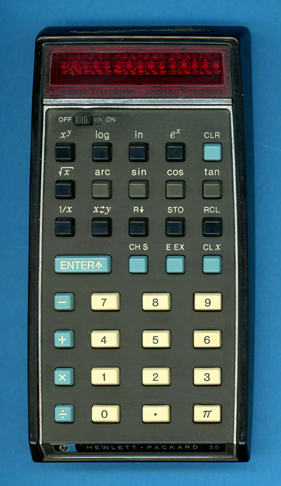
 Hewlett-Packard
introduced in January 1972 the World's first pocket sized electronic calculator
performing both logarithmic and trigonometric functions, simply named as Model
35 or HP-35 as reference to its number of keys. Hewlett-Packard did not only
define with the HP-35 the Scientific calculator, it redefined the design
approach and build quality of consumer electronic products.
Hewlett-Packard
introduced in January 1972 the World's first pocket sized electronic calculator
performing both logarithmic and trigonometric functions, simply named as Model
35 or HP-35 as reference to its number of keys. Hewlett-Packard did not only
define with the HP-35 the Scientific calculator, it redefined the design
approach and build quality of consumer electronic products.
While the appearance of other American-made calculators like the famous Bowmar 901B introduced only 4 months earlier was dominated by the Klixon keyboard provided by Texas Instruments together with the Integrated Circuits (ICs) for the calculator electronics and the package size defined by the six AA-sized batteries, went Hewlett-Packard a different way. The product team, completely inexperienced with consumer products, started measuring Bill Hewlett's shirt pocket size and then designed the housing of the calculator accordingly with smooth, prettifying curves and surface textures and spent a lot of efforts in dimensions, spacing, colors, contrast of keys and their lettering - only realizing that the remaining real estate for the calculator electronics and batteries was challenging. Actually very challenging, while Bowmar's 901B was centered around a TMS0103 single-chip calculator circuit and its "bounding box" measured around 23.4 cubic inches envisioned Hewlett-Packard's engineering team a 5-chip calculator brain and a bounding-box volume of 23.8 cubic inches. At first glance even more volume to uses, but the 901B had a boxy housing while the curved shape of the HP-35 traded a lot of volume for design.
Texas Instruments, with the Regency TR-1 Transistor Radio already experienced with the retail market of consumer products, split the difference of Bowmar's and Hewlett-Packard's approaches when designing the TI-2500 Datamath and consulted with Fred M. Gore of Fred Gore & Associates, Inc. an industrial designer to make the best out of their Klixon keyboards.
Hewlett-Packard, in 1972 a leading manufacturer of rather expensive Electronic Test and Measurement equipment, had a very simple philosophy: "Quality over Price" and they usually first designed a product to the highest specifications, calculated its manufacturing costs and added enough margin to keep sales channels and shareholders happy. Not exactly how consumer electronic works and based on the die sizes of the five ICs of its calculator brain, the 15-digit LED display and other, rather expensive components and design choices we assume that the manufacturing costs of the HP-35 were in 1972 around $200. Marketing understood that even the World's first portable Scientific calculator is a low-margin product and the retail price of $395 (around $3,000 in August 2023 per inflation calculator) looked high but was in a good balance with the $100 to $150 asking price in 1972 for the typical four-bangers (add, subtract, multiply and divide).
And Hewlett-Packard could enjoy their first-mover advantage, it took exactly 2 years before Texas Instruments introduced in January 1974 with the SR-50 their first Slide Rule calculator with superior performance but a selling price of only $169.95. And by January 1974 Hewlett-Packard had not only introduced with the HP-80 a Financial calculator, with the HP-45 their second Advanced Scientific calculator, but with the HP-65 the World's first portable Programmable calculator.
The HP-35 uses the Reverse Polish Notation with the [ENTER] key instead the usual [=] key and takes the responsibility for:
|
• The Death of the Slide Rule • The never ending Rivalry between TI and HP calculators users • The cat and mouse game leading to products like the HP-67 or TI-59 |
Learn more about Mostek
Calculator Integrated Circuits.
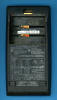
 Dismantling the featured HP-35 manufactured in January 1973 in
the United States reveals immediately the legendary build quality of
Hewlett-Packard's Test and Measurement equipment and we couldn't discover a
single instance where bean-counters ruled engineers. Starting with more than a
dozen of hidden screws to hold the calculator together, the gold-plated traces
of the printed circuit boards (PCBs), gold plated connectors and keyboard
contacts and ending with the mechanism to lock the battery cover with sliding
rubber feet and the 3-pin power supply connector locking the battery cover - the
HP-35 is a marvel of engineering! Fun fact: In the Datamath Calculator Museum
Lab - where we test, repair and reverse-engineer Texas
Instruments calculators - do we rely mainly on Hewlett-Packard equipment. Power
supplies, function and arbitrary generators, frequency counters, mixed signal
oscilloscopes and logic analyzers, everything sports the famous blue HP logo (or
Agilent...).
Dismantling the featured HP-35 manufactured in January 1973 in
the United States reveals immediately the legendary build quality of
Hewlett-Packard's Test and Measurement equipment and we couldn't discover a
single instance where bean-counters ruled engineers. Starting with more than a
dozen of hidden screws to hold the calculator together, the gold-plated traces
of the printed circuit boards (PCBs), gold plated connectors and keyboard
contacts and ending with the mechanism to lock the battery cover with sliding
rubber feet and the 3-pin power supply connector locking the battery cover - the
HP-35 is a marvel of engineering! Fun fact: In the Datamath Calculator Museum
Lab - where we test, repair and reverse-engineer Texas
Instruments calculators - do we rely mainly on Hewlett-Packard equipment. Power
supplies, function and arbitrary generators, frequency counters, mixed signal
oscilloscopes and logic analyzers, everything sports the famous blue HP logo (or
Agilent...).
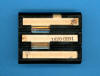
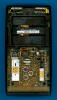 The internal design of the HP-35 is based on a
stack of two PCBs, separated with a plastic frame and electrically connected
with a 25-pin connector. The Main PCB contains the calculator brain, power
supply and a clock driver while the Keyboard and Display PCB includes the
contacts for the 35 keys and On-Off switch, the display drivers and
the 7-Segment LED display with 15 digits. The calculator is powered by a HP-82001A
battery pack with three AA-sized NiCd batteries that can be easily replaced.
The internal design of the HP-35 is based on a
stack of two PCBs, separated with a plastic frame and electrically connected
with a 25-pin connector. The Main PCB contains the calculator brain, power
supply and a clock driver while the Keyboard and Display PCB includes the
contacts for the 35 keys and On-Off switch, the display drivers and
the 7-Segment LED display with 15 digits. The calculator is powered by a HP-82001A
battery pack with three AA-sized NiCd batteries that can be easily replaced.
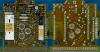 Hewlett-Packard designed the functional logic of all Integrated Circuits of
the HP-35 but outsourced the development, manufacturing, testing and packaging
of the five PMOS chips of the calculator brain to both Mostek Corporation in
Carrolton, TX and American Microsystems, Inc (AMI) in Santa Clara, CA. The
various ICs from Mostek and AMI are different from the implementation but
interchangeable in the calculator and we located in the featured HP-35 a mix of
both suppliers. The CPU of the HP-35 is based on a Serial 1-bit architecture
with 56-bit Registers and divided into two chips.
Hewlett-Packard designed the functional logic of all Integrated Circuits of
the HP-35 but outsourced the development, manufacturing, testing and packaging
of the five PMOS chips of the calculator brain to both Mostek Corporation in
Carrolton, TX and American Microsystems, Inc (AMI) in Santa Clara, CA. The
various ICs from Mostek and AMI are different from the implementation but
interchangeable in the calculator and we located in the featured HP-35 a mix of
both suppliers. The CPU of the HP-35 is based on a Serial 1-bit architecture
with 56-bit Registers and divided into two chips.
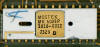
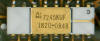 The first chip is called
Arithmetic and Register (A&R) Circuit and includes the Instruction Decoder,
Adder, Masking-logic for the operands, Registers and Display Decoder. The A&R
Chip of the featured calculator was manufactured by AMI and is marked with
1820-0848 and a date code of 7245, matching the calculator manufacturing date of
January 1973. The second chip, called Control and Timing (C&T) Circuit, includes
Address Register, Address Calculation for Branches, Page Decoder and Subroutine
Return Address for the external ROM and 12 Status Bits. The C&T Chip of the
featured calculator was manufactured by Mostek and uses not only HP's 1818-0012
part number but Mostek's MK6021P designation, too. Its date code of 7329 (July
1973) suggests that the calculator was repaired at some point with replacing the
Main PCB.
The first chip is called
Arithmetic and Register (A&R) Circuit and includes the Instruction Decoder,
Adder, Masking-logic for the operands, Registers and Display Decoder. The A&R
Chip of the featured calculator was manufactured by AMI and is marked with
1820-0848 and a date code of 7245, matching the calculator manufacturing date of
January 1973. The second chip, called Control and Timing (C&T) Circuit, includes
Address Register, Address Calculation for Branches, Page Decoder and Subroutine
Return Address for the external ROM and 12 Status Bits. The C&T Chip of the
featured calculator was manufactured by Mostek and uses not only HP's 1818-0012
part number but Mostek's MK6021P designation, too. Its date code of 7329 (July
1973) suggests that the calculator was repaired at some point with replacing the
Main PCB.
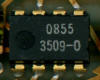
 The program of the HP-35 is
stored in three Read-Only Memories (ROMs) with a capacity of 256*10 bits, each.
These chips are housed in 10-pin TO99 Metal can packages and the featured
calculator uses HP-1818-0024 (MK6023L), HP 1818-0026 (MK6024L) and HP 1818-0029 (AMI). The HP 1820-0855 Clock Driver Chip converts the two-phase clock generated by the
Anode Driver and System Clock Chip located on the Keyboard and Display PCB to
appropriate voltage levels for the PMOS chips of the calculator brain.
The program of the HP-35 is
stored in three Read-Only Memories (ROMs) with a capacity of 256*10 bits, each.
These chips are housed in 10-pin TO99 Metal can packages and the featured
calculator uses HP-1818-0024 (MK6023L), HP 1818-0026 (MK6024L) and HP 1818-0029 (AMI). The HP 1820-0855 Clock Driver Chip converts the two-phase clock generated by the
Anode Driver and System Clock Chip located on the Keyboard and Display PCB to
appropriate voltage levels for the PMOS chips of the calculator brain.

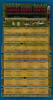 The Keyboard and Display PCB uses most of its real estate for the contacts
of the 35 keys and the On-Off Switch but contains both the 15-digit LED Display
and its drivers, too. The LED Display is assembled with 3 HP 1990-0335 5-digit 7-Segment LED Modules
operated in a multiplexed mode.
The Keyboard and Display PCB uses most of its real estate for the contacts
of the 35 keys and the On-Off Switch but contains both the 15-digit LED Display
and its drivers, too. The LED Display is assembled with 3 HP 1990-0335 5-digit 7-Segment LED Modules
operated in a multiplexed mode.

 The main clock of the HP-35 is generated by the
HP 1820-1029 Anode Driver and System Clock Chip and the HP 1820-1061 and Display Scanning and Cathode Driver Chip
is generating the multiplexing signals. Both chips in concert drive the Anodes
respectively Cathodes of the 7-Segment Display.
The main clock of the HP-35 is generated by the
HP 1820-1029 Anode Driver and System Clock Chip and the HP 1820-1061 and Display Scanning and Cathode Driver Chip
is generating the multiplexing signals. Both chips in concert drive the Anodes
respectively Cathodes of the 7-Segment Display.
Milestones of Hewlett-Packard calculators
Hewlett-Packard (HP) introduced in 1968 the World's first desktop scientific calculator, the HP 9100A. The programmable calculator stores programs on magnetic cards and lets scientists perform complex calculations without the need to access much larger computers. It is 10 times faster than most machines at solving science and engineering problems. Advertisements for the 9100A call the device a "personal computer," one of the first documented uses of the term.
Only 4 years later, on January 4, 1972, HP makes another advance in personal computing with the HP-35, the World's first scientific handheld calculator. Small enough to fit into a shirt pocket, the powerful HP-35 makes the engineer's slide rule obsolete. With the HP-80 a similar business model was introduced in February 1, 1973. In May of 1973 the HP-45 followed before the first programmable model HP-65 was introduced in January 19, 1974 with a retail price of $795. The HP-70 was introduced in August 1974 to complement the HP-80 as lower end business calculator and it took another few months till the introduction of the HP-55 in January 1975, the last calculator in Hewlett-Packard's series of "First Generation Handheld Calculators". Early in the year 1975 the price tag of the HP-35 dropped to $195 and the calculator was discontinued soon after with the introduction of its successor HP-21, a member of the "Second Generation Handheld Calculators". The introduction of the HP-31E in May 1978 together with its siblings HP-33E and HP-38E marked with the "Third Generation of Handheld Calculators" the end of HP calculators with LED Displays before introducing the revolutionary HP-41C with its alphanumeric LC-Display in July 1979 and the everlasting HP-12C and its sibling HP-11C in September 1981.
In the year 1975 dozens of companies manufactured calculators with 4 functions and a selling price below $20, scientific and business calculators in the range around $100 and programmable calculators priced about $250. The slide rule was outdated and famous companies like Dennert & Pape (ARISTO), A.W. Faber-Castell and Keuffel & Esser stopped the production.

If you have additions to the above article please email: joerg@datamath.org.
© Joerg Woerner, May 3, 2002. No reprints without written permission.