DATAMATH CALCULATOR MUSEUM
|
DATAMATH CALCULATOR MUSEUM |
Busicom "HANDY-LE" LE-120S
| Date of introduction: | February 1972 | Display technology: | LED modules |
| New price: | $295 | Display size: | 12 + Sign |
| Size: | 4.9" x 2.6" x
1.0" 124 x 67 x 25 mm3 |
||
| Weight: | 4.5 ounces, 128 grams | Serial No: 046684 | 27TB110337 |
| Batteries: | 4*AA Alkaline | Date of manufacture: | mth 03 year 1972 |
| AC-Adapter: | Origin of manufacture: | Japan | |
| Precision: | 12 | Integrated circuits: | MK6010L |
| Logic: | Adding Machine | Displays: | 12*Monsanto MAN-3A |
| Memories: | |||
| Program steps: | Courtesy of: | Joerg Woerner |
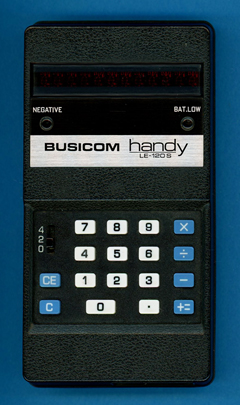
 When Nippon Calculating Machine Corp of Japan, better known under their brand
Busicom, explored their options of using LSI (Large Scale Integration) PMOS (p-channel Metal–oxide Semiconductor) technology for their electronic calculators, they teamed up with two American Semiconductor companies:
When Nippon Calculating Machine Corp of Japan, better known under their brand
Busicom, explored their options of using LSI (Large Scale Integration) PMOS (p-channel Metal–oxide Semiconductor) technology for their electronic calculators, they teamed up with two American Semiconductor companies:
|
• Intel: Desktop calculators with programmable functionality – Up to 16 digits capacity with optional printer • Mostek: Compact desktop calculators with fixed functionality – Up to 12 digits capacity, non-printing or printing |
The cooperation with Intel resulted in the famous 4004, the World's first microprocessor, while Mostek's MK6010 is recognized as the World's first "single-chip calculator circuit".
Busicom realized the potential of applying Mostek's ion-implantation process to the chip design and the resulting MK6010L "low-voltage, low-power" version of the MK6010 allowed the design of the incredible "HANDY-LE" LE-120A calculator.
The Busicom LE-120A is today credited with many "Firsts":
|
• First truly pocket-sized electronic calculator • First hand-held calculator using a "single-chip calculator circuit" • First use of an LED (Light-emitting Diode) display with an electronic calculator • First calculator operated with disposable batteries |
Unfortunately, the many "Firsts" did not immediately translate into a massive sales success as observed with the later Hewlett Packard HP-35 using the same playbook. The LE-120A with its unique metal-cast body and its 12-digit LED display was very expensive and when Busicom started lowering the manufacturing costs by switching to a plastic body (the featured LE-120S), changing the display size to 10-digits (LE-100A) and even 8-digits (LE-80S, LE-80A, LE-80B); competition was already up and running and leading to the start of the "Calculator War" – with Busicom being in 1974 the first casualty of a Japanese calculator manufacturer.
As of May 2026, we have identified 7 members of the Handy series manufactured by Nippon Calculating Machine Corp. and sold under its Busicom brand, as well as white-labeled versions for National Cash Register (NCR) and Privileg (Quelle):
| Model | Introduction | Serial # | Size | Weight | Batteries | Display | PCB # | Calculator Chip |
NCR Model |
Privileg Model |
Notes |
| LE-120A | Feb. 1971 | 25_B1___ | 123 x 66 x 20 mm3 | 205 grams | 4*AA | 12 Digits 2 LEDs |
Mostek MK6010L |
Metal housing | |||
| LE-120S | Feb. 1972 | 27_B1___ | 124 x 67 x 25 mm3 | 135 grams | 4*AA | 12 Digits 2 LEDs |
Mostek MK6010L |
Plastic housing | |||
| LE-80S Version 1 |
47_B1___ | 124 x 67 x 25 mm3 | 126 grams | 4*AA | 8 Digits 3 LEDs |
PCB-0097 PCB-0098 |
Mostek MK6010L |
03988 47_Q |
8-digit LE-120S | ||
| LE-80S Version 2 |
52_B1___ | 126 x 67 x 25 mm3 | 129 grams | 4*AA | 8 Digits 3 LEDs |
PCB-0116 PCB-0098 |
Mostek MK6010L |
03988 52_Q |
Larger Keys | ||
| LE-80A | May 1972 | 35_B1___ | 81 x 56 x 21 mm3 | 74 grams | 4*NN | 8+1 Digits | QP-3809 QP-3811 |
TI TMS0105BNC |
|||
| LE-80B | tbd 1972 | 37_B1___ | 81 x 56 x 21 mm3 | 74 grams | 4*NN | 8+1 Digits | |
TI TMS0105BNC |
|||
| LE-100A | Sep. 1972 | 39_B1___ | 124 x 67 x 25 mm3 | 129 grams | 4*AA | 10+1 Digits | QP4601 | TI TMS0106NC |
CLASS 18-44 | 10-digit LE-120S |
We acquired this Busicom LE-120S calculator together with three other calculators on our quest to untangle the relationships between the MK6010L, MK5012, MK5010, and Cal-Tex CT5002 single-chip calculator circuits. Each calculator went through our "Teardown Treatment", Characterization of Single-Chip Calculator Circuits and De-capping and Chip-Photography:
|
• MK6010L - Busicom LE-120S,
Teardown,
Characterization,
Die Photo • MK5012 - Caltronic 912, Teardown, Characterization, Die Photo • MK5010 - Rapid Data Rapidman 800, Teardown, Characterization, Die Photo • CT5002 - Caltronic 812, Teardown, Characterization, Die Photo |
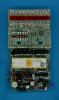
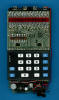

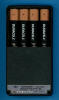
 Dismantling
the featured Busicom "LE HANDY" LE-120S calculator manufactured in March 1972 in Japan reveals a
great example of engineering and cost-reduction. While the two-piece housing and
detachable battery compartment of its predecessor LE-120A are made of die-cast
metal, uses the featured LE-120S calculator a two-piece housing and made of
precision-molded plastic parts with an integrated battery compartment. The
LE-120S is containing three double-sided printed circuit boards
(PCBs):
Dismantling
the featured Busicom "LE HANDY" LE-120S calculator manufactured in March 1972 in Japan reveals a
great example of engineering and cost-reduction. While the two-piece housing and
detachable battery compartment of its predecessor LE-120A are made of die-cast
metal, uses the featured LE-120S calculator a two-piece housing and made of
precision-molded plastic parts with an integrated battery compartment. The
LE-120S is containing three double-sided printed circuit boards
(PCBs):
|
• Main-PCB - Mostek MK6010L single-chip calculator circuit, display driver and power supply • Display-PCB - Twelve 7-segment LED display modules, two indicator LEDs and current limiting resistors • Keyboard-PCB - Contacts for keys and sliding switch, discrete diodes for keyboard encoding |
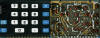
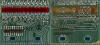
 To
gain some knowledge about the differences between the
MK6010L located in this Busicom LE-120S
and the MK5012 used with the Caltronic
912, we
decided here at the Datamath Calculator Museum to give it a "Teardown
Treatment" and sharing our findings accordingly.
To
gain some knowledge about the differences between the
MK6010L located in this Busicom LE-120S
and the MK5012 used with the Caltronic
912, we
decided here at the Datamath Calculator Museum to give it a "Teardown
Treatment" and sharing our findings accordingly.
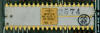 Calculating Unit:
Sprague Electric Company helped move ion-implantation from experimental research into practical semiconductor manufacturing. In collaboration with Mostek, the process was refined for large-scale production of integrated circuits.
Ion-implantation provided major advantages over older diffusion techniques by allowing precise control of dopants within silicon wafers. This precision enabled lower transistor threshold levels and reduced operating voltages, leading to lower power consumption and improved reliability.
Nippon Calculating Machine Corp., on the other hand, had developed its Busicom Model 120-DM using JMOS technology and requested that the MK6010 be designed with a high-threshold process so the existing power supply and display circuitry could be reused.
Calculating Unit:
Sprague Electric Company helped move ion-implantation from experimental research into practical semiconductor manufacturing. In collaboration with Mostek, the process was refined for large-scale production of integrated circuits.
Ion-implantation provided major advantages over older diffusion techniques by allowing precise control of dopants within silicon wafers. This precision enabled lower transistor threshold levels and reduced operating voltages, leading to lower power consumption and improved reliability.
Nippon Calculating Machine Corp., on the other hand, had developed its Busicom Model 120-DM using JMOS technology and requested that the MK6010 be designed with a high-threshold process so the existing power supply and display circuitry could be reused.
The MK6010L used in the Busicom LE-120S is a variant of Mostek's MK6010, the world's first single-chip calculator circuit, manufactured with an ion-implantation process to reduce the required supply voltages from −12 V and −24 V to −9 V and −16 V:
|
• November 1970 – Mostek
MK6010: −12 V and −24 V • June 1971 – Mostek MK6010L: −9 V and −16 V • June 1971 – General Instrument 250: −25 V • September 1971 – Texas Instruments TMS1802: −7.2 V and −14.4 V |
 Display:
The featured Busicom LE-120S calculator, manufactured in March 1972, utilizes a 12-digit LED display assembly composed of twelve Monsanto MAN-3A seven-segment LED displays housed in flat-pack packages and manually soldered onto
the double-sided Display-PCB. In addition to the numeric displays, the Display-PCB incorporates two indicator LEDs for negative values and low-battery status, as well as the associated current-limiting resistors. The
Display-PCB is connected to the Main-PCB of the LE-120S by 24 short wires that are soldered directly between the two boards.
Display:
The featured Busicom LE-120S calculator, manufactured in March 1972, utilizes a 12-digit LED display assembly composed of twelve Monsanto MAN-3A seven-segment LED displays housed in flat-pack packages and manually soldered onto
the double-sided Display-PCB. In addition to the numeric displays, the Display-PCB incorporates two indicator LEDs for negative values and low-battery status, as well as the associated current-limiting resistors. The
Display-PCB is connected to the Main-PCB of the LE-120S by 24 short wires that are soldered directly between the two boards.
Display Driver: The MK6010L single-chip calculator circuit and its
companion, the MK6010, originated from the architecture of the Busicom Model 120-DM desktop calculator, better known as the Busicom
Junior. This calculator was built from 22 JMOS integrated circuits and featured
low-voltage vacuum fluorescent displays (VFDs). To facilitate display
interfacing, the designers chose a negative-logic configuration for the digit
and segment outputs, enabling straightforward drive circuitry based on discrete
transistors. This design philosophy was carried over to the MK6010 and MK6010L.
Consequently, both devices provide negative-logic digit and segment outputs,
requiring PNP bipolar junction transistors (BJTs) to drive the anodes and
cathodes of the 12-digit LED display.
The necessary discrete transistors are arranged on the Main-PCB of the LE-120S
calculator.
Clock: The MK6010L single-chip calculator circuit used in the Busicom LE-120S operates from a two-phase clock running at approximately 20 to 25 kHz. The clock signal is generated by an astable multivibrator consisting of four BJTs, which is located on the calculator's
Main-PCB.
Power Supply: The Busicom LE-120S calculator is powered by four
disposable AA-size 1.5 V alkaline batteries. A simple DC/DC converter generates
two additional negative supply voltages required by the MK6010L calculator chip:
|
• VSS - Positive supply for MK6010L (+6.0 V) from batteries • GND - Negative supply for LED Display (0 V) from batteries • VDD - Negative supply for MK6010L (-3.1 V) from DC/DC converter • VGG - Negative supply for MK6010L (-10.0 V) from DC/DC converter |
We measured the operating current of the featured Busicom LE-120S calculator for two different cases:
| Mode | Display | Current VBAT = 6.0 V |
Clock Frequency |
| Calculating | 0. | 89 mA | 22 kHz |
| Calculating | 888888888888 | 213 mA | 22 kHz |
Calculating the power consumption at 6 Volts for the Busicim LE-120S results in about 530 mW displaying a '0' and about 1,280 mW with all segments illuminated.
 Keyboard:
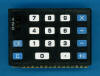
The keyboard assembly of the Busicom LE-120S uses 17
plastic keys pushing individual metal fingers soldered on a double-sided PCB against
large, gold-plated contacts mounted on the PCB and a 3-position sliding switch
to select the position of the decimal point. The compact Keyboard-PCB incorporates 14 discrete diodes to convert the numeric key inputs into the BCD-encoding required by the MK6010L calculator
chip. In addition, the board contains a number of discrete resistors and
capacitors used for the keyboard interface circuitry.
Keyboard:
The keyboard assembly of the Busicom LE-120S uses 17
plastic keys pushing individual metal fingers soldered on a double-sided PCB against
large, gold-plated contacts mounted on the PCB and a 3-position sliding switch
to select the position of the decimal point. The compact Keyboard-PCB incorporates 14 discrete diodes to convert the numeric key inputs into the BCD-encoding required by the MK6010L calculator
chip. In addition, the board contains a number of discrete resistors and
capacitors used for the keyboard interface circuitry.
 Here
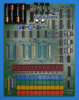
at the Datamath Calculator Museum we use
the DCM-50A Platform to
Characterize and
Reverse-engineer
Single-chip Calculator Circuits. Many designs of electronic calculators do not
use all features of their calculator brains and it would be difficult to unleash
the full potential of the calculator chips in these cases. Additionally are
electronic calculators "closed systems" with limited flexibility to measure
signals, change voltages or clock frequencies, provide additional input keys or
even change the display technology or specifications additional digits. Core
idea of the DCM-50A is providing a generic platform to access all features of a
single-chip calculator circuit and with the
DCM-50A (PLAYGROUND) we
increased the scope from Texas Instruments products to offerings from their
competitors in the 1970s, namely AMI, Cal-Tex, Commodore/MOS Technology,
Electronic Arrays, General Instrument, Hitachi, Litronix, Matsushita,
Mitsubishi, Mostek, National Semiconductor, NEC, Omron, RFT, Rockwell, Sharp,
Toshiba, and Western Digital.
Here
at the Datamath Calculator Museum we use
the DCM-50A Platform to
Characterize and
Reverse-engineer
Single-chip Calculator Circuits. Many designs of electronic calculators do not
use all features of their calculator brains and it would be difficult to unleash
the full potential of the calculator chips in these cases. Additionally are
electronic calculators "closed systems" with limited flexibility to measure
signals, change voltages or clock frequencies, provide additional input keys or
even change the display technology or specifications additional digits. Core
idea of the DCM-50A is providing a generic platform to access all features of a
single-chip calculator circuit and with the
DCM-50A (PLAYGROUND) we
increased the scope from Texas Instruments products to offerings from their
competitors in the 1970s, namely AMI, Cal-Tex, Commodore/MOS Technology,
Electronic Arrays, General Instrument, Hitachi, Litronix, Matsushita,
Mitsubishi, Mostek, National Semiconductor, NEC, Omron, RFT, Rockwell, Sharp,
Toshiba, and Western Digital.
On our quest to document Mostek's MK6010 Chip and its
many descendants like the MK5010, MK5011, MK5012 and Cal-Tex' CT5001, CT5002, and
CT5012, we developed here at the Datamath Calculator Museum three additional
tools for our DCM-50A (PLAYGROUND):
| •
DCM-50A
(PLAYGROUND) MK6010 Adapter: Daughter Board for the
DCM-50A (PLAYGROUND)
Digit Inverter Frame Carrier for
Mostek's MK6010 Product Family • DCM-50A (PLAYGROUND) KBD102 Keyboard: Keyboard with 20 individual keys to support the MK6010-style BCD-Encoding keyboard input • DCM-50A (PLAYGROUND) Digilent I/O Extender: Plug-In Board to add six additional Input Signals for the Digilent Discovery |
Comparing the Calculator Logic Implementation of the 12-digit MK6010L retrieved from the featured Busicom LE-120S calculator with the Calculator Logic Implementation of the 10-digit MK5010 chip used with the Rapid Data Rapidman 800 reveals only subtle differences, the MK5010 is even outputting in some cases 12-digit numbers: Pressing the [C] or [CE] key lit up the display with all 12 digits showing '888888888888' with the both the MK6010L and the MK5010. More importantly, all discovered Calculator Logic Bugs of the MK6010L are still present with the MK5010 but obviously the Twelfth Digit Multiplication Bug and Twelfth Digit Division Bug are not detectable with its 10-digit calculating capability.
In a next step, we used a Logic Analyzer to compare the timing of the two single-chip calculator circuits and again, no differences. Even the pattern of how the MK6010L and MK5010 are "crashing" during a Divide by Zero operation is 100% identical.
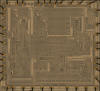 In our final attempt, we decided to "decap" the
MK6010L, MK5012 and MK5010 chips salvaged from the Busicom LE-120S, Caltonic 912 and Rapid Data Rapidman 800
calculators and asked Sean Riddle to
provide us with high-resolution images of the silicon dies.
In our final attempt, we decided to "decap" the
MK6010L, MK5012 and MK5010 chips salvaged from the Busicom LE-120S, Caltonic 912 and Rapid Data Rapidman 800
calculators and asked Sean Riddle to
provide us with high-resolution images of the silicon dies.
First surprise: The silicon die inside the MK6010L package is
marked with MK6015.
 Second
surprise: The MK6015 (MK6010L/MK5012) looks identical to the MK6010 chip.
Second
surprise: The MK6015 (MK6010L/MK5012) looks identical to the MK6010 chip.

If you have additions to the above article please email: joerg@datamath.org.
© Joerg Woerner, June 27, 2026. No reprints without written permission.